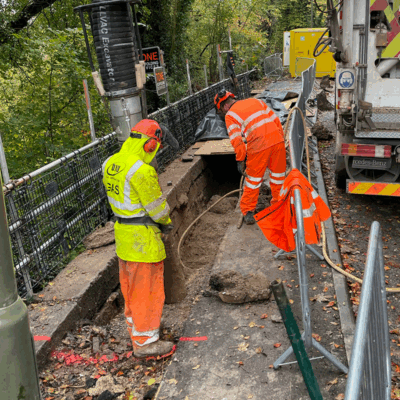
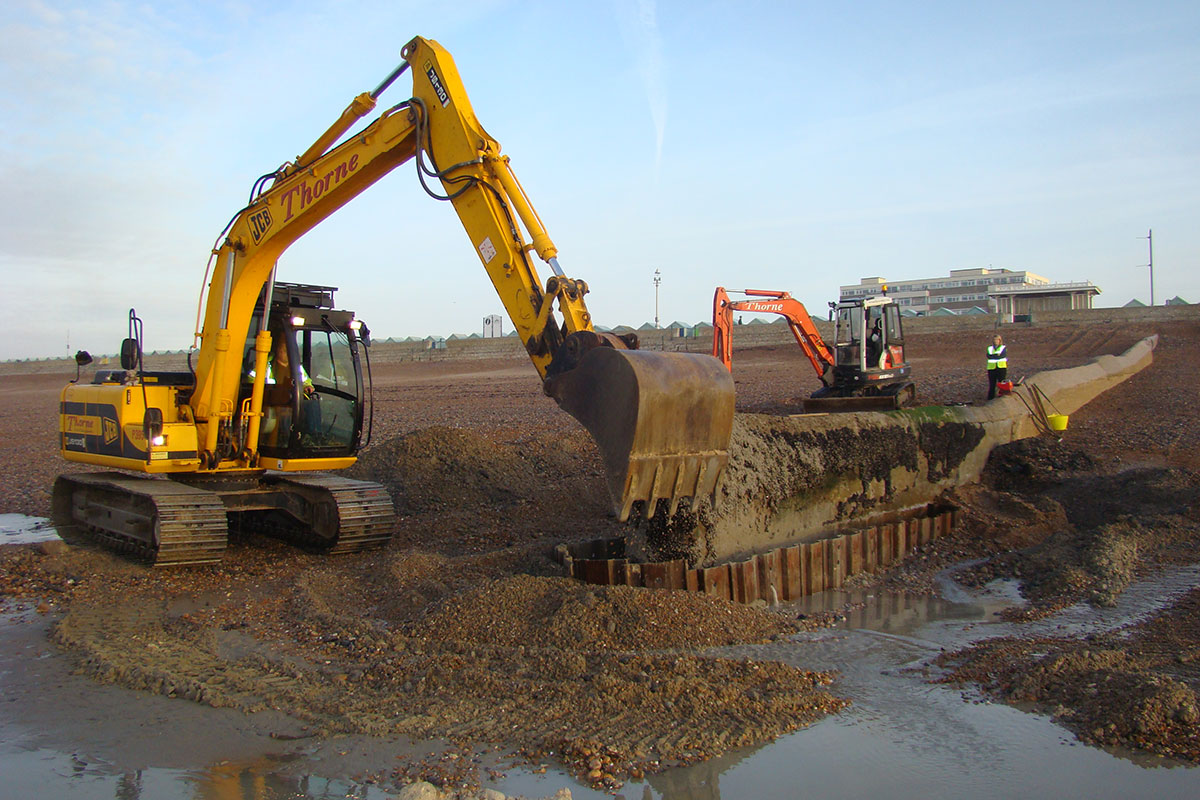
Each project we undertake is an opportunity to have a positive impact, upon the environment and local people.
In fact, much of our work is about environmental protection, for example erosion control and flood defences.
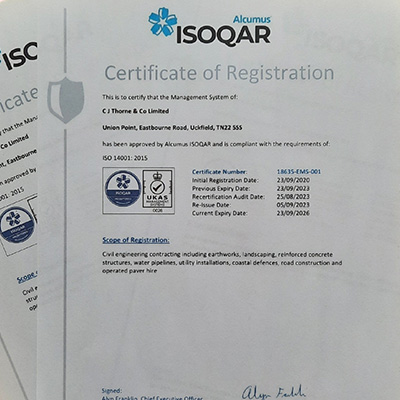
We conform to, and often exceed, all guidance from the Environment Agency, our clients and any other environmental organisations involved. We are ISO 14001 certified and consistently strive to minimise our environmental footprint.
We work closely with local communities to minimise disruption to residents and businesses. And we ensure that our suppliers and partners maintain the same high standards.
ISO 14001
Balancing environmental and socio-economic needs
Our ISO 14001 accreditation demonstrates that we take a systematic approach to sustainable development.
To achieve and maintain this status we must:
- Prevent or mitigate any adverse environmental impacts from our work.
- Fulfil our compliance obligations in relation to the environment.
- Consider the entire life cycle of our services, ensuring that environmental impacts are controlled, rather than simply shifted to another stage in the life cycle.
Minimising waste
Using less and reusing more
We manage the life cycle of all materials and equipment, to minimise wastage and maximise recycling.
Our waste management initiatives start at the point we purchase materials; we work hard to select the most sustainable options and ensure that there will be minimal waste. For example, we only use timber from sustainable sources, such as FSC certified wood.
We are proactive in proposing more environmentally friendly solutions for our projects, such as using recycled roadstone instead of primary aggregates.
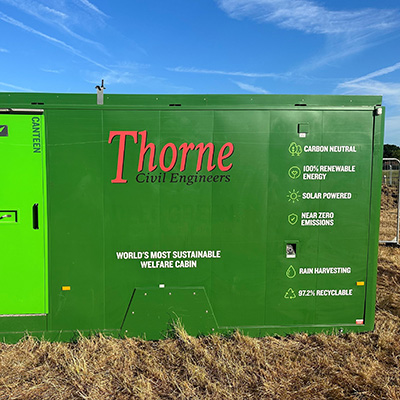
We’re careful to conserve energy and water in all we do. Our eco-welfare unit is an excellent example of this. It incorporates solar panels and a rainwater harvesting system, giving it close to zero CO2 emissions and significantly reducing our use of water on site. We have also installed solar panels at our Union Point office.
Every year we invest heavily in upgrading our fleet of plant and vehicles, which are regularly serviced to ensure they’re running efficiently and not burning fuel unnecessarily.
Any waste produced is separated by type. Wherever feasible we will recycle the waste materials, including metal, paper and cardboard.
Working with our partners
Considering the environment throughout the supply chain
We often work in partnership with other companies to deliver our projects.
Checking that any new suppliers meet our standards for sustainability is an integral part of our procurement process.
We partner with both new and established suppliers to ensure they use sustainably sourced materials, and take action to minimise waste and maximise recycling.